
Abbas Aisha was mending her herbal medicine kiosk around 6 pm in April 2014 when she heard the noise and heavy breaths of people scampering for safety from the bullets of the Boko Haram fighters in Gwoza, one of Borno’s populous towns.
One hour earlier, the terrorists — locally known as Mutani Dutse, meaning ‘people living on the mountain’ — had dislodged soldiers guarding the town, devoured their armoury, attacked fleeing residents and hoisted their flag in the town.
Aisha picked up a few of her belongings, together with her husband, tiptoed via the Mandara mountain down to Yola, the capital city of Adamawa state, where she would later work on farms as a labourer. The couple’s life trajectory took a downturn. They never had it easy after then.
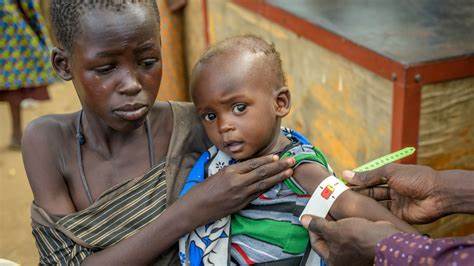
Since they left Gwoza for Yola, Aisha said she and her husband barely had a two-square meal a day. The situation worsened when she conceived twins – Hassan and Hussein — in 2022. While she was pregnant, Aisha said she fed mostly on corn derivates like Tuwo, Miyan Kuka and Miyan Yakuwa. At times, she would feed on leaves or even cook without meat, fish or seasoning. Two months after she gave birth to the twins, Aisha said the kids would cry heavily, stool and cough uncontrollably for the better part of the night.