
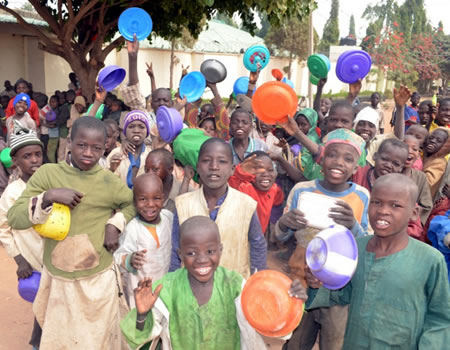
Nigeria is facing a potential danger. It cannot adequately feed its citizens. Food production is declining amid a growing population. The Chief of Defense Staff, Gen CG Musa told the House of Representatives in November, 2023 when he was briefing them on the state of security, he said: “if people cannot eat, if people are hungry, no matter how you tell them to keep the peace, they will not and that breeds criminality. Those are the aspects we are looking at, particularly good governance.”
There is a nexus between food insecurity, hunger, crime and political instability. Hunger in the land is purveying crime. The nation’s correctional facilities are over-congested and more convicted criminals are uploaded daily, constraining and adding more pressure on the existing facilities. This translates to the high level of crime in the country.
Bad governance, corruption, ineffective distribution of state-owned resources across class strata, unemployment etc. The aforementioned are some of the factors responsible for the rising trend of poverty and crime. The growing food shortages in the country is partly attributable to insecurity across farming communities: banditry in North-Central states, Boko Haram insurgency in the North-Eastern states, Banditry and kidnapping in the North-Western states. These three regions including the South-West and slightly with the South-South are host to the ten major food producing states in the country: Benue, Taraba, Oyo, Kaduna, Niger, Ogun, Yobe, Jigawa, Kwara and Cross River States.
According to the National Bureau of Statistics (NBS), the country’s inflation for the last quarter of 2023 is 28.20%. The high inflation, oil subsidy removal and the depreciating level of our currency helped and jerked-up the cost of transportation, import bills and grossly affected the cost of food items and other consumables in the market.
Though, President Bola Ahmed Tinubu’s government is suffering from some of the poor economic policies of former President Muhammadu Buhari. Since Buhari removed subsidy on fertilizer, the cost of fertilizer went up and affected the production of food, crippling subsisting farming, thereby, triggering scarcity and hunger.
He also banned the importation of 44 commodities that we are not producing, even when we do, it cannot guarantee sufficiency, might not be up to commercial quantity, hence, creating scarcity in the market place and increase in the price of the same commodity. E.g. Rice.
President Tinubu thought it wise when he opened up our borders, this will help crash the prices of some consumables and lower economic pressure. Tinubu needs to declare a state of emergency in the agricultural sector or else, the nation will risk a prolonged period of insecurity. To have a secure country, the government of the day must institute good governance and prioritize agriculture by having a robust trajectory for both subsistence and commercial agriculture.
With the abundant arable farm land in Nigeria, favourable and diverse climates, which are suitable for the production of many crops and the huge labour force that abound in the country. Nigeria being the poverty capital of the world is unacceptable.
No country makes any significant progress when its population is not well-fed. Moreover, there is correlation between healthy feeding and healthy living on one side, and productive population and economic growth on the other side. To have a healthy and productive population, governments across the board must make food available to its population in a cost effective way. Until we overcome hunger, our bourgeoned population will be a wasted population and a liability to the nation because hunger and poverty kills innovation, creativity and productivity.
Bomba Dauda
Publisher of Gurara Accord