
Bomba Dauda
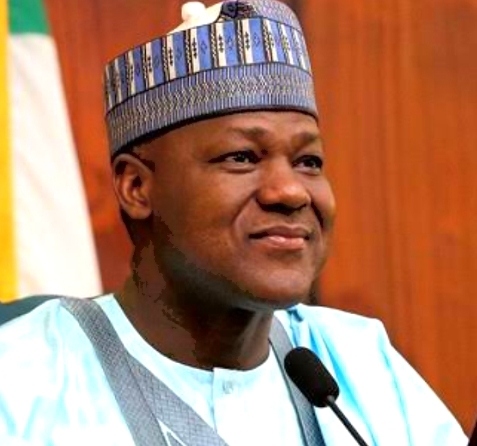
Former Speaker of the House of Representatives, Rt. Hon. Yakubu Dogara, has described President Bola Ahmed Tinubu’s ongoing tax reforms as the most ambitious overhaul of Nigeria’s fiscal framework in decades, stressing that its success could determine the country’s economic destiny.
Dogara stated this while delivering the maiden Distinguished Parliamentarian Lecture organised by the House of Representatives Press Corps at the National Assembly Complex, Abuja, with the theme: Navigating Tax Reform in Nigeria: Insights on President Tinubu’s Policies.
The former Speaker explained that President Tinubu met an economy weakened by reckless monetary practices, including the printing of over ₦22.7 trillion through ways and means, a dual exchange rate regime, and unsustainable foreign loans tied to crude oil sales. He noted that urgent and radical reforms were necessary to avert an economic collapse.
“Every reformer knows that progress is not promised, it is always fought for. What is required is courage to do the right thing, not necessarily to have all things under control,” Dogara said, commending the President for resisting opposition to the reform agenda.
Key Features of the Reforms
Dogara highlighted the work of the Presidential Committee on Fiscal Policy and Tax Reform, chaired by Prof. Taiwo Oyedele, which produced four landmark laws:
- Nigeria Tax Act (NTA) 2025 – consolidating 16 separate tax statutes into a unified framework.
- Nigeria Tax Administration Act (NTAA) 2025 – modernising collection, dispute resolution and compliance rules.
- Nigeria Revenue Service (Establishment) Act (NRSEA) 2025 – creating a central revenue agency to replace FIRS.
- Joint Revenue Board (Establishment) Act (JRBEA) 2025 – harmonising federal and state tax administration.
He explained that the reforms broaden the tax base to cover digital services, virtual currencies, FX gains, and prizes; introduce a global minimum effective tax rate for multinationals; expand capital gains tax to offshore transactions; and provide exemptions for small businesses and low-income earners.
Other provisions include streamlined filing for low-income earners, electronic fiscal systems for VAT enforcement, and the introduction of a unified Tax Identification Number tied to NIN and CAC registration.
Challenges Ahead
The former Speaker identified uncertainty, technological demands, limited professional capacity, and compliance costs as major challenges to the reforms, warning that success would depend on predictable implementation, transparency, and building public trust.
“True tax reform is not about raising rates but about raising trust. When citizens can see where their naira goes, they are proud to give it,” he stressed.
Dogara urged the Federal Government to treat the reforms as a covenant with the people, assuring them that resources generated would be deployed responsibly to infrastructure, healthcare, education, and security.
He further called on President Tinubu to “take no prisoners” in ensuring full implementation and sustaining the reform, adding:
“This is a legacy that will impact generations and cement President Tinubu’s place in Nigeria’s history as the most consequential economic reformer of our time.”
The new tax laws are expected to take effect in phases, with the NTA and NTAA commencing on January 1, 2026, while the NRSEA and JRBEA begin from June 26, 2025.