
Bomba Dauda
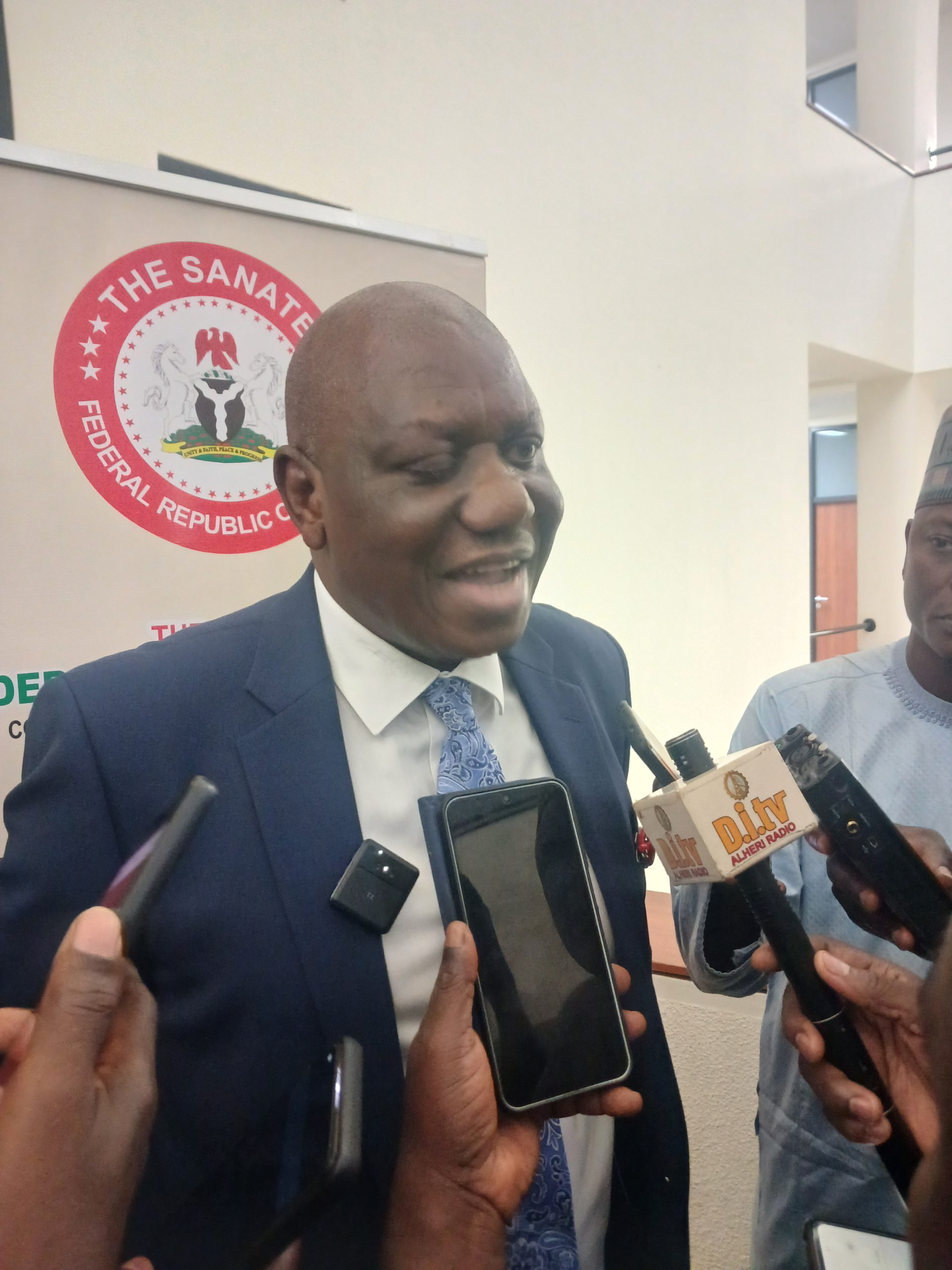
The Senate on Tuesday held a crucial public hearing on the Sickle Cell Disorder Research and Therapy Centres (Establishment) Bill, 2025, sponsored by Senator Sunday Marshall Katung, who made a passionate case for urgent and systemic reforms in the nation’s sickle cell response.
Addressing lawmakers, health experts, civil society organisations and affected families, Sen. Katung described the bill as “a moral imperative” aimed at reversing decades of preventable deaths and improving the quality of life for millions of Nigerians living with Sickle Cell Disorder (SCD).
Under the proposed law, seven Sickle Cell Disorder Research and Therapy Centres will be established—one in each of the six geopolitical zones and one in the Federal Capital Territory. These centres will provide comprehensive diagnostic services, specialised care, research capabilities, data tracking and long-term support for patients and families.
Sen. Katung highlighted sobering statistics: Nigeria records the highest number of SCD births globally, with about 150,000 babies born with the disorder every year. Even more alarming, over 650 children die daily from complications associated with the condition.
“These numbers are not just statistics,” he said. “Behind every number is a name, a family, a community, and a future we are losing.”
He recalled a heartbreaking encounter in 1992 with a young boy suffering repeated crises, who pleaded with his parents to “let me die so that you can rest,” a memory he said marked the beginning of his lifelong commitment to improving SCD care.
According to Sen. Katung, Nigeria’s high mortality rate is not due to lack of medical knowledge but due to systemic gaps — inadequate early diagnosis, limited access to specialised care, weak research infrastructure and poor data systems.
The bill, structured into 27 clauses, seeks to provide the institutional and legal framework needed to fix these deficiencies. The centres will also partner with teaching hospitals, universities and international research institutions to enhance capacity-building and innovation.
The legislation provides for:
- Universal newborn screening for early detection
- Inclusion of SCD services in national health insurance schemes
- Protection of patients against discrimination in schools and workplaces
- Development of a national SCD registry for data-driven policy
- Structured training for medical personnel at all levels
- Sustainable, multi-source funding for the centres
Sen. Katung stressed that early diagnosis and consistent care dramatically improve outcomes, noting that in countries with strong health systems, over 90% of individuals born with SCD now survive into adulthood.
He urged stakeholders to confront corruption, weak health systems and policy inertia that often derail good intentions. Beyond legislation, he called for a continental effort to subsidise treatments, ensure constant drug availability and boost public awareness.
“The question is simple,” he said. “Why should a Nigerian child born with SCD have a drastically lower chance of survival than a child born elsewhere?”
He also cited the courageous example of Tabitha, a young pharmacist and SCD survivor who worked on the COVID-19 frontline in Kafanchan, as proof that individuals with the disorder can lead productive lives if properly supported.
From parents forced into debt to save their children, to students whose education is interrupted by recurrent crises, to families mourning children lost too soon, Sen. Katung emphasized that the human toll demands immediate action.
“This Bill is not just another legislative proposal—it is a roadmap for hope, equity, and transformation,” he declared. “Passing it is a moral duty.”
He appealed for unanimous support, saying the outcome of the public hearing would determine “whether thousands of Nigerians live or die in the coming years.”
Sen. Katung concluded with a pledge to remain a committed advocate for improved sickle cell care and expressed hope that future generations would inherit a world free from the burden of Sickle Cell Disease and Thalassemia.
“Let us refuse to let geography decide who lives or dies,” he said. “Together, we can turn the pain and struggles of millions into a narrative of survival and triumph.”
The public hearing continues with submissions from experts, civil society groups and affected families, whose inputs will shape the final draft of the bill.