
Bomba Dauda
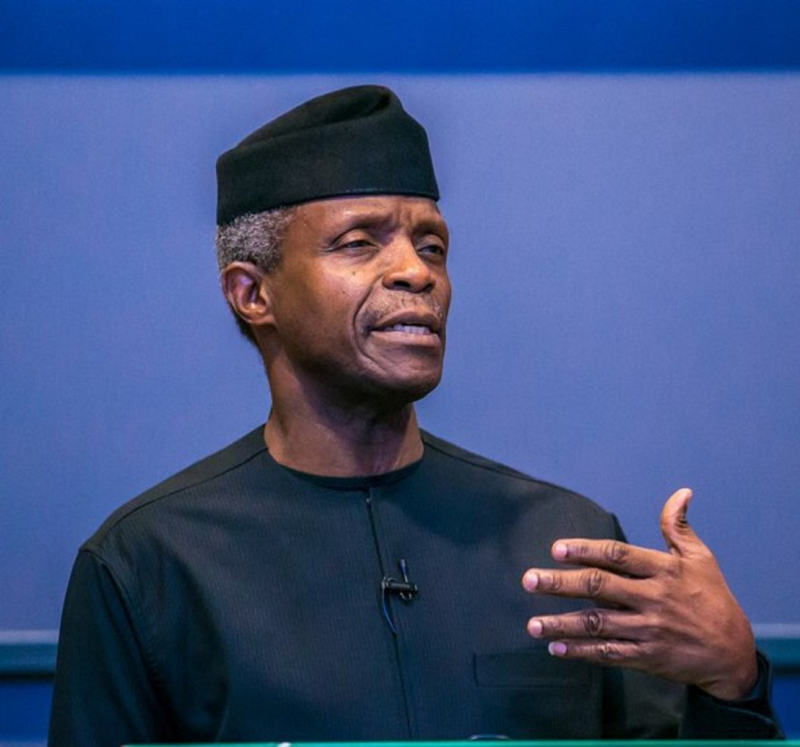
Former Vice President of Nigeria, Prof. Yemi Osinbajo, represented by his Chief of Staff Mr. Ade Ipaye, has called for urgent, practical and justice-driven solutions to the growing displacement crisis in Nigeria. He made the remarks in a virtual address while chairing the 10th House of Justice Summit held on Friday in Kaduna.
Osinbajo commended the House of Justice for a decade of consistent advocacy on social justice and praised its commitment to tackling Nigeria’s most pressing humanitarian challenges. This year’s summit focused on the plight of Internally Displaced Persons (IDPs), a crisis he described as “traumatic, persistent, and deeply destabilizing.”
According to him, over 3.4 million Nigerians—majority women and children—remain displaced due to insurgency, communal clashes, and natural disasters. He lamented the overcrowded and unsafe conditions in IDP camps, limited access to food, health care, education, and protection, and warned that without decisive action, “these problems may be carried into future generations.”
Osinbajo stressed the need for a comprehensive national response combining emergency aid, rehabilitation, and long-term reintegration. He urged stakeholders to produce actionable recommendations capable of influencing government policy and strengthening institutions responsible for IDP welfare.
At the event, Chairman of the Nigeria Law Reform Commission, Prof. Dakas CJ Dakas, delivered the keynote address, emphasizing the urgent need for Nigeria to domesticate the Kampala Convention, a key African treaty for the protection of displaced persons. Although Nigeria ratified the treaty, failure to domesticate it means it lacks full legal force within the country.
Dakas highlighted serious legal and institutional gaps that leave IDPs vulnerable, including weak coordination among government agencies, inadequate funding, and gaps in policy implementation. He argued that Nigeria must shift “from relief to justice,” prioritizing victims’ rights, accountability for atrocities, and long-term solutions such as safe return, local integration, and planned resettlement.
He also outlined a series of reforms, including:
Enacting a National IDP Rights Act
Establishing IDP oversight committees at federal and state levels
Creating a national reparations fund
Protecting IDPs’ voting rights
Strengthening prosecution of perpetrators
Ensuring education, security and gender-sensitive support for children, women and persons with disabilities
Improving data collection and transparency by the National Population Commission
Dakas warned against prioritising the rehabilitation of insurgents over the rights of their victims, saying such an approach “incentivises criminality and endangers national stability.”
Both speakers affirmed that Nigeria has the capacity to resolve the displacement crisis if government, civil society, and international partners adopt coordinated, victim-centred and justice-grounded strategies.
The summit brought together policymakers, legal experts, humanitarian actors and community leaders committed to advancing protection, justice, and durable solutions for Nigeria’s millions of displaced citizens.