By Charles Dyaji
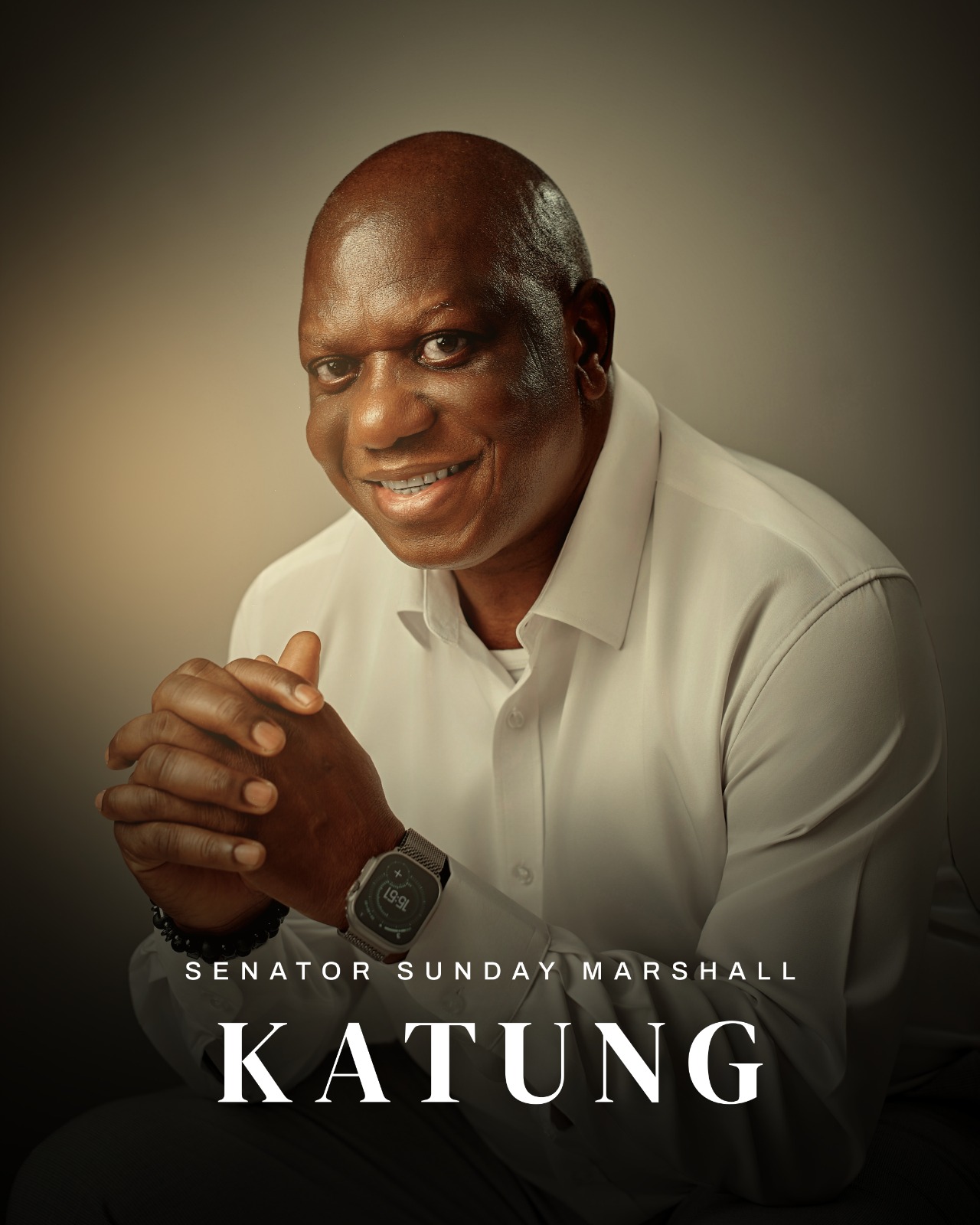
Senator Sunday Marshall Katung speaks softly, but his bills and motions make him one of the loudest voices in the National Assembly, argues CHARLES BALA DYAJI_
On Wednesday, 14 October 2026, the Senate passed for third reading the Federal University of Applied Sciences Teaching Hospital, Kachia Bill (SB 1058), sponsored by Senator Sunday Marshall Katung of Kaduna South Senatorial District. The news did not trend, and many people in Kafanchan and Kachia will hear of it second-hand. That, in my view, sums up the senator: soft-spoken in person, but loud on the floor of the National Assembly in the one language the statute book records, which is bills and motions.
The bill came up on the report of the Senate Committee on Health (Secondary and Tertiary), presented by Senator Abdul Ningi on behalf of its chairman, Senator Ipalibo Harry Banigo. It amends the First Schedule of the principal Act to add the new hospital to the list of federal teaching hospitals, and it now goes to the House of Representatives for concurrence. To an engineer the logic is plain. A university that trains medical students without a teaching hospital is a power station without a transmission line: the generation is real, but nothing reaches the consumer. This bill supplies the line.
Katung is soft-spoken. He is fond of saying that no one is rewarded for effort, only for results. Our politics, however, tends to mistake noise for voice. The senator who shouts on the floor and trends on social media is praised as vocal, while a colleague who spends his days lobbying for projects for his people in ministries and at the Villa is accused of being absent. Yet the Senate’s Votes and Proceedings record no decibels, only bills read and motions adopted, and by that record few senators are louder. How, then, should Southern Kaduna measure the man it elected in 2023? I respectfully submit that the honest scorecard is what has moved from the order paper into law, and from law into buildings.
Consider the Federal University of Applied Sciences, Kachia (FUASK). An earlier push for a federal university in Southern Kaduna, begun in 2018, did not become law. Katung’s bill (SB 13) was read the first time on 27 July 2023, barely six weeks after the 10th Senate was inaugurated, and passed third reading on 8 October 2024. He framed it as a university of applied sciences, the first of its kind in Nigeria, and after the public hearing he agreed with stakeholders to move the site from the Federal School of Statistics, Manchok, to Kachia, where existing structures allowed immediate take-off. By February 2025, the Federal Executive Council had approved the takeover of the forfeited Nok University assets, and the National Universities Commission (NUC) has since approved 18 full-time programmes.
None of this was won by shouting. Vice President Kashim Shettima, speaking at Kamuru in Zangon Kataf Local Government Area, said he had approached President Bola Tinubu together with Katung and their colleague in the House of Representatives, and that the President had consented. The same method produced the Federal Medical Centre (FMC), Kafanchan. Katung’s Federal Medical Centres Act (Amendment) Bill, 2024 (SB 355) was first read on 21 February 2024, with Hon. Amos Magaji of Zangon Kataf/Jaba Federal Constituency pursuing the same goal in the House. The President approved the centre before the legislative process was complete, and the Senate passed the bill in May 2025. Both approvals came while Katung sat on the opposition benches; he joined the All Progressives Congress (APC) only in late 2025. Results of that kind come from relationships built patiently, across party lines, long before any vote is called.
His work reaches beyond Kaduna South Senatorial District. The Sickle Cell Disorder Research and Therapy Centres (Establishment) Bill, 2025 (SB 893), which has passed second reading, proposes a centre in each geopolitical zone and the Federal Capital Territory, at a first-phase cost he puts at ₦4.7 billion. He first tried to sponsor such a bill in 2016 as a member of the House of Representatives; it stalled, and he brought it back. On 9 June 2026, the Senate adopted his motion on reviving the textile industries, with particular reference to the Kaduna-Kano axis, where Nigeria’s first large-scale mill opened in 1957. With co-sponsors across party and regional lines, Senators Simon Lalong and Aminu Tambuwal among them, the Senate urged a ban on textile imports and intervention funds through the Bank of Industry (BoI).
What, then, should happen next? The House of Representatives should concur with SB 1058 before the 10th Assembly winds down. The Federal Ministry of Health and Social Welfare and the Budget Office of the Federation should then capture take-off funds for the hospital in the 2027 Appropriation Bill; a hospital without staff, equipment and a running-cost line is only a signboard. The more ambitious step belongs to us.
In a legislature, a voice is measured not in decibels but in what it puts on the order paper and what that paper becomes: the lecture halls at Kachia today and, if the House and the Budget Office play their part, the wards of a teaching hospital tomorrow. By that measure, few voices on the floor of the National Assembly are louder than that of the soft-spoken senator from Kaduna South.
Charles Bala Dyaji is a Lecturer, Tech and Renewable Energy Consultant and the Convener of Southern Kaduna Tech Conference.