
Bomba Dauda
The Minister of Defence, General Christopher Gwabin Musa (rtd), OFR, has urged communities in Kaduna State to adopt strategic and proactive measures in securing their communities and protecting lives and property.
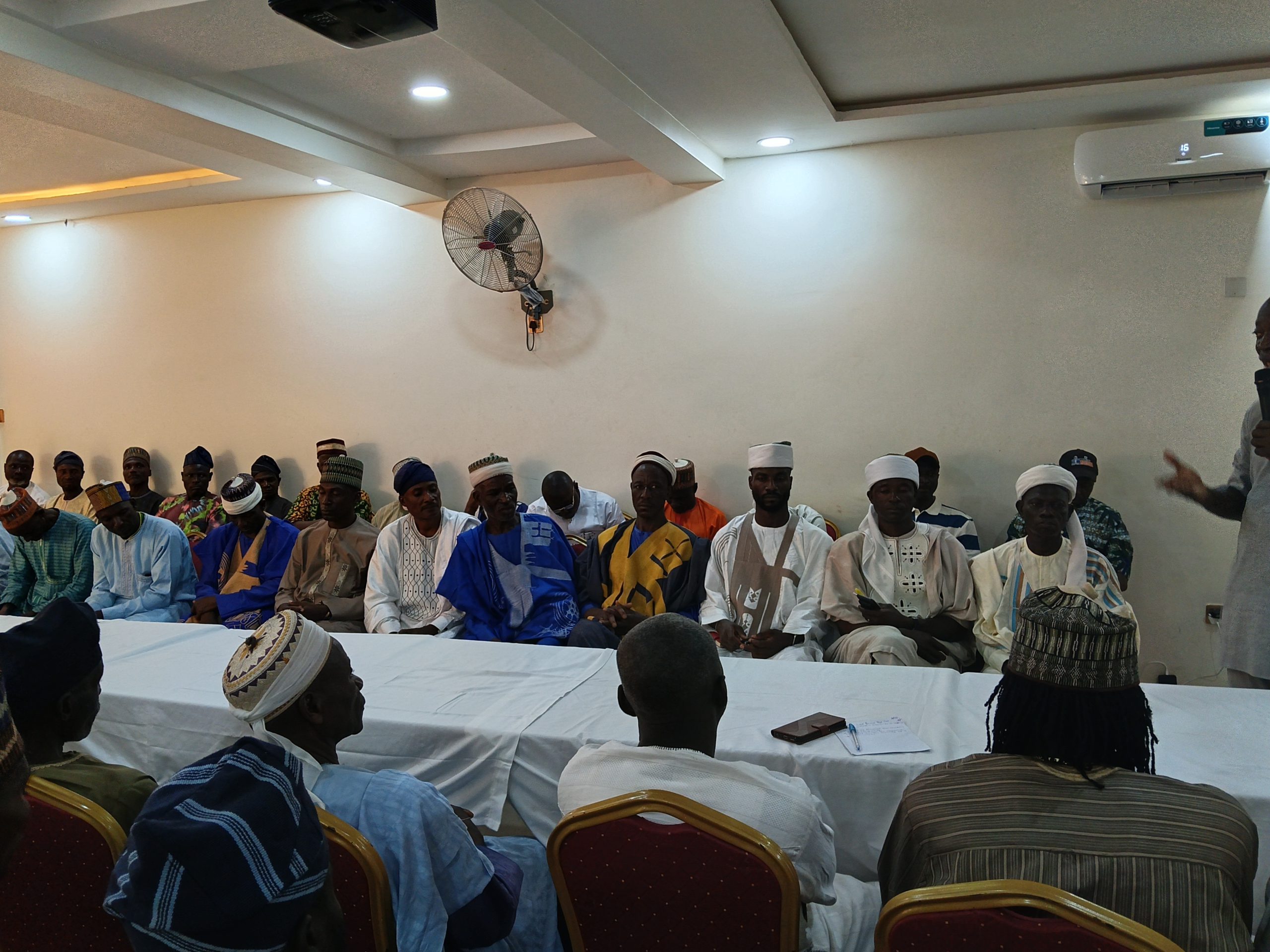
The Minister, who was ably represented by his Special Adviser on Security, Musa Likita, made the call on Saturday, September 26, 2026, during a strategic security meeting with community stakeholders, youth leaders, representatives of the Christian Association of Nigeria (CAN), Jama’atu Nasril Islam (JNI), civil society organisations and other community representatives in Kaduna.
The meeting brought together stakeholders from Mararaban Rido, Mararaban Rido Hausa, Bagado, Rido Gbagyi, Kamazo, Janruwa, Kudasa, Mahuta, Kujama and other communities.
Speaking on behalf of the Minister, Likita said the fight against banditry, cattle rustling and terrorism required active participation from communities, stressing that everyone has a role to play in addressing insecurity.
He urged residents not to leave the responsibility of securing their communities entirely to security agencies, but to strengthen vigilance, intelligence gathering and cooperation among security personnel and neighbouring communities.
“I am here to encourage you to do more and not to sleep on your oars. Keep vigilance on visitors to your community and also play key roles in information gathering, networking and creating synergy between security personnel and communities by sharing ideas,” Likita said.
He also called on communities to identify and expose informants and collaborators working with criminal elements, stressing that community-based intelligence was crucial to tackling insecurity.
Likita further emphasised the important role of women in the security architecture of communities, noting that women are often closer to their children and can easily notice changes in their behaviour, particularly signs of drug abuse and involvement in criminal activities.
He urged women and other community members to pay attention to early warning signs and share credible information with the appropriate authorities.
Speaking further, Likita said communities must take greater responsibility for their security while working within the law and supporting security agencies.
He said the limited number of security personnel in relation to Nigeria’s large population made community participation and intelligence sharing particularly important.
Meanwhile, a community leader from Kujama (Ungwan Mission), Bulus Maisamari, appealed to the government to support youths with modern security and surveillance technology.
Maisamari specifically called for capacity building in the use of drones, robotic dogs and night-vision goggles to enhance surveillance and strengthen the ability of communities to detect security threats.
Also speaking, Kaura James, leader of “Akama Da Hanu,” a youth-based community security surveillance group in Kujama, appealed to the government to provide the group with motorcycles and other logistical support.
James said such support would enable the youths to respond more effectively to security threats, particularly as criminal elements often use motorcycles to escape from communities.
In his remarks, the Dagacin Rido Gbagyi, Mr Joel B. Adam, thanked the Minister of Defence for the initiative, describing the engagement as an important step towards improving security across the axis.
He appealed to the government to consider and act on the recommendations made by the various communities during the meeting.
Adam also called for the restoration and strengthening of the traditional institution, which he described as being close to the people and an effective mechanism for managing insecurity and resolving crises at the grassroots.
He therefore appealed to the government to reinstate and empower the traditional institution to enable traditional leaders to effectively perform their statutory roles in conflict prevention, community mobilisation and crisis management.
The stakeholders called for sustained collaboration among government, security agencies, traditional institutions, religious bodies, youth groups, women and civil society organisations to address insecurity and strengthen community-based security mechanisms across Kaduna State.