
Bomba Dauda
Nigeria and Türkiye have moved to significantly expand their military cooperation, sealing a broad defence partnership at the Antalya Diplomacy Forum 2026 that targets training, technology transfer and maritime security.
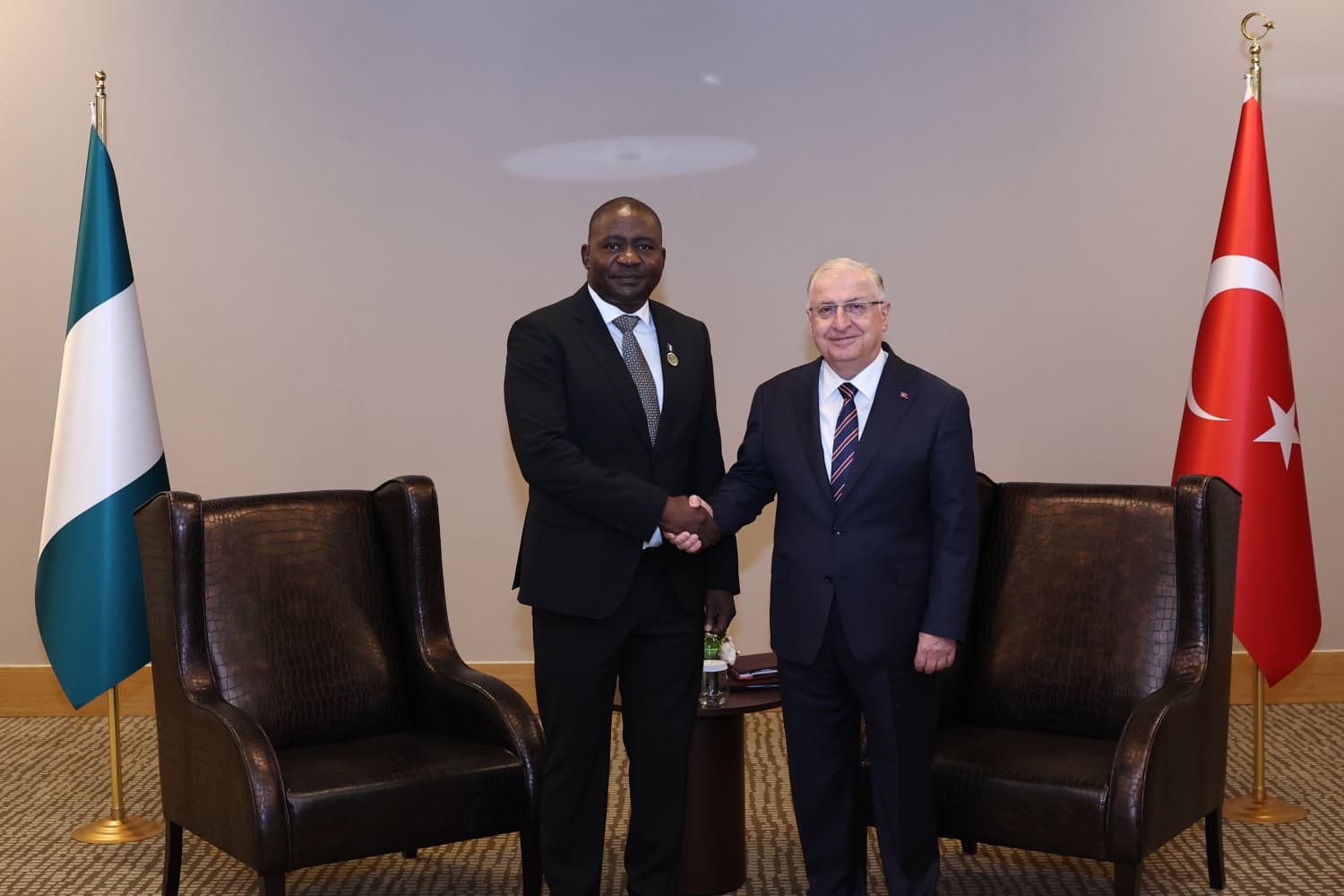
The agreement followed high-level bilateral talks led by Nigeria’s Minister of Defence, Mohammed Badaru Abubakar, who met with his Turkish counterpart alongside senior military and diplomatic officials. The engagement underscores Abuja’s push to strengthen its defence architecture under President Bola Ahmed Tinubu’s Renewed Hope Agenda.
At the heart of the deal is an ambitious training framework for Nigerian Armed Forces personnel. Türkiye is expected to provide specialised instruction in special operations, counterterrorism, intelligence coordination, counter-drone and counter-IED operations, as well as United Nations pre-deployment exercises. Both countries also agreed to establish a major military training facility in Nigeria, with an interim site to be used pending the development of a permanent coastal base.
Beyond training, the partnership opens a new phase of defence industry collaboration. Both sides committed to technology transfer, joint development projects and maintenance training—steps aimed at boosting Nigeria’s indigenous defence capabilities. Platforms such as the International Defence Industry Fair (IDEF) 2026 are expected to serve as key avenues for advancing these goals.
Türkiye has also indicated readiness to support Nigeria with advanced military hardware, including surveillance systems, unmanned aerial vehicles, satellite-enabled monitoring tools, and specialised air and ground assets tailored to Nigeria’s security needs.
On the security front, both nations agreed to commence immediate technical engagements on integrated border management, intelligence sharing and coordinated responses to evolving non-state threats. Ankara further pledged to share expertise in disarmament, deradicalisation and reintegration programmes for former combatants—an area critical to Nigeria’s internal security efforts.
The scope of cooperation extends to air and naval capabilities, with plans to enhance aviation maintenance systems, improve operational readiness and explore the acquisition and support of helicopters and unmanned platforms. Nigerian naval officials are also set to engage their Turkish counterparts on maritime systems and specialised training to strengthen coastal and offshore security.
Speaking after the meeting, Chief of Defence Staff, General Christopher Gwabin Musa, described the outcome as a “significant step forward” in Nigeria–Türkiye relations, stressing the emphasis on practical implementation and measurable outcomes.
The agreements reached in Antalya are expected to be formalised through official channels, with immediate next steps including training deployments, technical exchanges and planning for new defence infrastructure across Nigeria.