

By
George Makeri
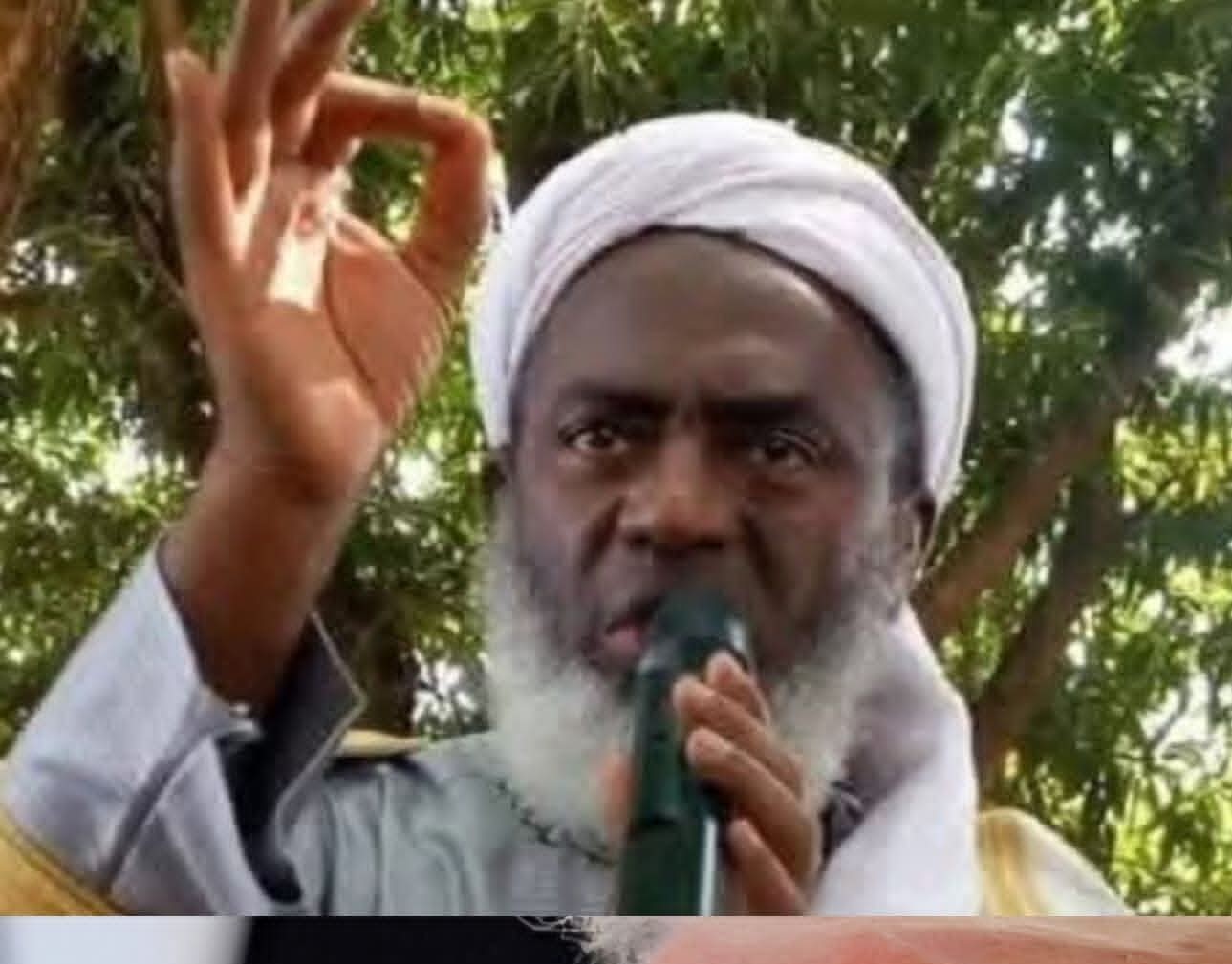
In the murky theater of Nigeria’s endless security crisis, a singular figure operates with chilling, almost brazen, impunity. He is not a general, a spy, or a warlord. He is a cleric: Sheikh Ahmad Gumi has carved for himself a niche of unparalleled leverage, a pulpit from which he sermonizes not just salvation, but subversion. The stakes, existential for a nation teetering on the precipice, seem only to amplify his audacity. This is the story of a man weaving a dangerous narrative where terrorism, faith, and identity are deliberately, and dangerously, entangled.
Recall, if you will, the shameless gambit that first thrust him into the stark light of national infamy. At the height of the banditry plague, this “holy man” allegedly whispered to Kalashnikov-toting marauders that they had little to fear from Muslim soldiers; their bullets, he insinuated, were reserved for the Christian faithful in uniform. It was a calculated incitement to mutiny, an attempt to fracture the military along sectarian lines. The intent was as transparent as it was toxic: to transform a national security force into a proxy for religious war.
From that nadir, his rhetoric has only metastasized. Today, the sympathiser of the bloodsucking terrorists of a cleric performs a dizzying moral pirouette. He labels the United States a “terrorist” state, unrighteous and thus disqualified from pursuing jihadists. Yet, in a baffling geopolitical sleight of hand, he anoints nations like Turkey, Pakistan, and China as sufficiently “righteous” for the same grim task. The punchline, delivered with a straight face, is his declaration that Donald Trump’s military campaigns were not counter-terrorism, but the vanguard of a “neo-crusade” against Islam. The sheer, galling chutzpah of it takes one’s breath away.
While many now dismiss him as possessing mere nuisance value, this is a fatal misreading. Unchecked, such venom has a half-life. It seeps into the groundwater of public discourse, ready to infect the minds of the simps and the gullible (a demographic, alas, never in short supply). For in Gumi’s twisted catechism, a stark equation is drawn: any attack on a terrorist is an attack on Islam. By extension, any assault on Fulani bandits becomes an assault on the “Muslim North.” Until recently, this elastic definition of “the North” was stretched to shield even common criminals of northern extraction, clumsily bundling Christian communities of the Middle Belt into a political shield not of their making.
But a fascinating, long-overdue reckoning is unfolding. A collective voice, weary and defiant, is rising from the very regions his rhetoric claims to defend. “We are not part of your north,” cry the people of the Middle Belt. “We are not part of your north,” echo significant Hausa communities. The question then becomes inevitable, haunting: What, in God’s name, constitutes “the North” today?
If we follow the logic of the shadow catechism to its grim conclusion, the answer is not a geographic or cultural bloc, but a cabal. By my assessment, today’s “North” is a nebulous consortium of violence and its apologists. It comprises the Fulani bandit on a motorcycle, the Boko Haram fanatic in the bush, the ISWAP executioner with a blade. Its intellectual and political vanguard includes Gumi himself; the controversially polarizing former governor Nasir El-Rufai; Senator Shehu Buba, known for his overt romance with Fulani bandits; Bello Bodejo, Miyetti Allah leader known for provocative rhetoric in defense of Fulani terrorism; Sheikh Yahaya Jingir, who specializes in incitement; academics like Prof. Usman Yusuf, who traffic in divisive sophistry; and a whole constellation of covert sympathizers and enablers operating in boardrooms, newsrooms, and corridors of power.
This is the sinister genius of the operation: to redefine a vast, diverse region into a fortress for fugitives, a haven for harbingers of hate. It is a project of psychological conquest, where loyalty to a perverted idea of faith and kinship trumps the rule of law and the sanctity of the Nigerian citizen.
The danger is no longer just in the forests where bullets fly. It is in the quiet, insidious war for the Nigerian mind. Sheikh Gumi is not merely commenting on the conflict; he is actively scripting its most divisive and enduring chapters. To ignore him is to ignore the architect of a narrative that may long outlive the gunfire. The nation is not just fighting bandits and terrorists; it is fighting a story. And in this kind of war, the most potent weapon isn’t always a rifle; sometimes, it’s a microphone in the hands of a cleric spinning lies into dogma.