

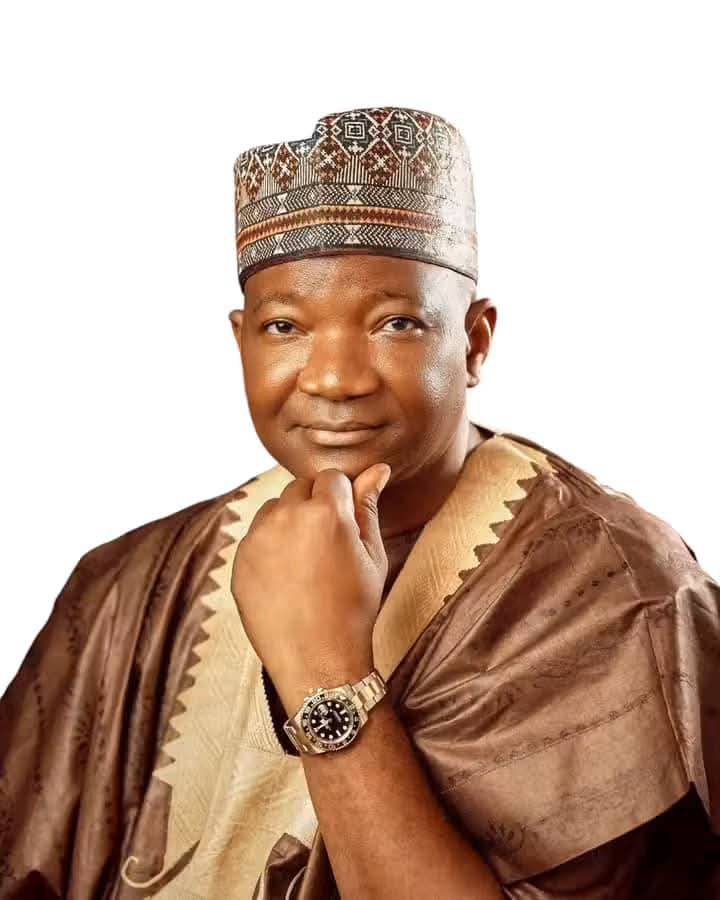
By Victor Teh Dabo
Leadership in a democratic setting is best assessed not in abstraction, but within the context of political realities, institutional constraints, public expectations, and the ever-present demand for tangible deliverables. It is against this backdrop that the leadership trajectory of Hon. Daniel Amos, Member representing Jema’a/Sanga Federal Constituency, can be meaningfully examined, particularly following his formal realignment with the All Progressives Congress (APC).
At its core, politics is a means to an end: the delivery of representation, development, and opportunities to the people. At that, it is also an arena shaped by shifting alliances, power structures, and platforms that determine the extent to which elected officials can translate intent into impact. Hon. Amos’ leadership, therefore, must be understood within the intersection of expected deliverables and the challenges inherent in transitioning to a new political platform.
From the moment of his election in 2023, Daniel Amos has operated under intense public expectations that are neither unreasonable nor unique. Constituents naturally judge leadership by visible outcomes: infrastructure, empowerment, advocacy, and effective voice within national governance. In this sense, leadership is not merely about presence in parliament but about relevance to everyday realities at home.
Amos’ approach to leadership has increasingly reflected an understanding of this social contract. His sustained engagement with stakeholders, community leaders, and party structures suggests a deliberate attempt to align representation with grassroots realities. Leadership, in this framing, becomes both representational and relational, rooted in dialogue and responsiveness rather than distance.
Political Context and the Logic of Realignment
Political platforms matter. They shape access, influence, and the latitude available to a representative to attract projects and interventions. Hon. Amos’ decision to realign with the APC must therefore be situated within the broader political context of Nigeria’s federal system, where proximity to the governing platform often enhances the prospects of constituency-focused deliverables.
Realignment, however, is never without cost. It comes with skepticism, resistance, and the challenge of managing perception among constituents and party faithful alike. For Amos, the transition to the APC demanded not only political recalibration but also leadership clarity notioned on the ability to reassure supporters that the move was strategic, constituency-driven, and anchored in the pursuit of measurable benefits rather than personal ambition.
Aligning with a new political party, therefore, requires more than formal declaration; it requires integration, bridge-building, and trust consolidation. Within the APC, Amos has had to navigate established structures, diverse interests, and internal dynamics while asserting his relevance and constituency mandate.
Recent engagements, such as the January 7th meeting with elected representatives, federal and state appointees, senior legislative aides, grassroots stakeholders across Sanga and Jema’a, reflect a leadership style that prioritizes inclusion and consensus. These interactions are significant, not merely as political gatherings, but as signals of intent: to embed his leadership within the party’s collective vision while safeguarding the interests of his constituency.
Ultimately, leadership is validated by outcomes. Political alignment raises expectations, not lowers them. The true measure of Amos’ leadership within the APC framework will rest on his ability to leverage the platform to deliver concrete benefits, whether through advocacy, facilitation of federal interventions, or strengthened institutional presence for Jema’a and Sanga at the national level.
In this regard, his leadership challenge is twofold: to convert access into advantage, and to ensure that political strategy yields social and economic dividends for the people he represents. These seeming leadership challenges he will surmount with the least trouble.
Perspectives and the Road Ahead
Viewed in perspective, Daniel Amos’ leadership reflects a pragmatic understanding of politics as both principle and process. His realignment with the APC underlines a willingness to adapt to political realities while remaining anchored to constituency expectations. It is a leadership path marked by negotiation, recalibration, and continuous engagement.
As Hon. Daniel Amos continues to navigate the demands of leadership within a new political context, there is a compelling need for supporters, observers, and critical stakeholders to recalibrate their focus. Leadership intentions are best strengthened when they are met with constructive alignment rather than platform-based prejudgment. Politics, after all, is a vehicle; deliverables are the destination.
The call, therefore, is for all who support and watch the leadership journey of Daniel Amos to anchor their expectations on outcomes, impact, and measurable gains for Jema’a and Sanga, rather than on partisan labels. By aligning with the broader leadership intent, which prioritizes representation, access, and development, constituents play a vital role in reinforcing accountability while enabling progress.
In this shared responsibility between leader and the led lies the true essence of democratic governance: where expectations are clear, engagement is purposeful, and leadership is ultimately judged not by the platform it stands on, but by the value it delivers to the people.
God bless Daniel Amos.
Victor Teh Dabo
SA Media & Publicity to Hon. Daniel Amos.
26/1/2026